Showing posts with label Kenya. Show all posts

Saturday, February 9, 2013

Kwaheri, Africa! See you next time!

As I get ready to move for my new role in China, I can't help but have mixed feelings about my imminent departure from Africa.  My life in Africa has been filled with a colorful collection of maddening frustration, wild amusement, life-changing personal (& professional) lessons, and endearing friendships.  This has been one of the most memorable and worthwhile thing I've done in my life so far...a big THANK YOU, to everyone here (friends, chance encounters, strangers on the street), for making the last 18 months so memorable and meaningful!

There are many things I will miss, but other things I'm eager to do without:

I will miss the most random conversations / encountering I have while working / traveling that can be both hilarious and frustrating at the same time (but certainly make good stories)
I will not miss having to follow up on people 100 times to remind them to do their job and frequently yell at people from the top of my lung in order to get something simple done (that's someone else's daily job / profession)

I will miss getting uttermost attention (not to be confused with great service) at even very cheap hotels and restaurants, being called "Ms. Arlin", and feeling very respected (this is more so the case in Nigeria)
I will not miss feeling like not being able to fit in, that people will always look at you as though you're a upper class citizen, and giving you differential treatment or do not voice their opinion because they are afraid of making a mistake in front of you

I will miss the smell of sun on my clean laundry
I will not miss doing laundry by hand, especially after a very muddy hike over the beautiful, iron-rich African soil

I will miss the sandwich lady who visits my office every day, bringing delicious samosa and swahili dishes for 200 ksh...
I will not miss pizza Friday at the office, where our office manager forces us this horrible diet every Friday, missing the point that its main purpose is to get everyone together on a casual note rather than eat pizza, despite of the name "pizza Friday"  (it's better because it's free, but still...)


I will miss my undeserved celebrity status (for being foreign and thus "special")
I will not miss getting marriage proposals from random nameless guys wherever I go ...no, I don't roll that way!


I will miss the beautiful Nairobian weather year round at 28C
I will not miss the horde of big fat termites when it rains that have their way of invading your house despite of all the locked doors and windows

I will miss the big smile all Kenyans carry on their face and the endless good jokes from fun-loving Nigerians
I will not miss the hopelessly corrupt policemen who make your life miserable just to make 400ksh

I will miss being so close to raw, untouched nature & walking safaris where the animals look at you, recognize you exist, but do not run away...makes it feel truly like you're living and sharing this world together
I will not miss tourists on safaris with their giant cameras and showering $1 bills / pens to local children (creating a horrible culture/expectations)

I will miss having the routine of a fixed (taxi) driver, someone I can chat with, and learn more about culture and just life in general
I will not miss having to take a taxi everywhere and can never just go outside impromptu

I will miss River Cafe and Honey Beauty in Gigiri, where it's the perfect santuary for good food, followed by out of this world massage pampering
I will not miss seeing the ridiculous wealth among the diplomatic / international aid circle and feeling like I'm part of some sort of neo-colonial era

I will miss enjoying beautiful (and super affordable @ $1-2) flowers whenever I want a bouquet to freshen up my flat
I will not miss the never ending awkward moments when the street hawker persistently try to get my guy friends to buy me flowers

Lastly...
I will miss the amazing friendships I've developed and being part of a league of extraordinary folks trying to make a difference in the world!

This is not the end, I shall be back!


Thursday, December 6, 2012

Being "nice" vs. being "a doormat"

During my first year in Africa, I have been told on several occasions that I am more accommodating than most expats.  One example is that I don't make a fuss if a driver is 10 minutes late or have a less than pristine car.  Service is EVERYWHERE in Nairobi, and basic service is pretty decent here as far as taxi...etc. small things go!  So technically, if someone is not prompt, there are many others waiting in line to serve and take my money.  I have been told by other expats that I shouldn't tolerate that, but I guess unless I really need to get somewhere, I didn't find a reason to make a big deal, well, except to assert "I'm the client, you're the service provider" power dynamic.  For whatever reason, I just haven't felt the need to do that!  I've dealt with way more difficult/annoying situations that a lot of things just seems pretty minor and tolerable at this point.  The only time I felt the need to assert myself was when I was in India and in Turkey because people are generally more aggressive and almost intruding into my personal space.  But in Kenya, I found most people very easy-going, and the people I work with are not really "lazy"...they may be joggling multiple jobs and could get caught in the horrible traffic on the way, but the tardiness usually was the result of poor planning (re: Africa time), not malicious intention to take advantage of me....at least, this was my impression...I could be wrong...and to me, while not ideal, those are fairly acceptable excuses.  Perhaps I have set my expectation too low...am I being "too" nice or not demanding enough?   I was warned that people will take advantage of your "niceness" if you let them, but somehow I just have trouble with anything that resembles a "master-servant" relationship... 

At what point does "being nice" turn into "being a doormat" and losing respect?

My more affluent African colleagues have advised that if you are being too "nice", the boss-subordinate relationship quickly becomes blurred, and trouble will soon follow as people quickly begin to believe they are indispensable...why else would you be so nice to them?   Once that mindset begin to take place, they start to show up late and slack off (because they know you won't reprehend them in any way)...it's a bit like disciplining a child, only that it's an adult that you're dealing with and the normal Western view is to treat them as equals, and assume they know what's "right" and what's "wrong"...

I think perhaps the later assumption of Africans (especially less educated ones) have the same definition of what's "right" and what's "wrong" as the "westerners" is erroneous.  Over the course of my time here, I've observed that what's right and what's wrong is actually a fairly fluid concept.  And for the most part, what's going to give me pleasure and pride now is the right thing.  For a taxi driver, it is "right" to rush between 2 jobs even if it means that one client could be waiting for long if traffic is bad (which it almost certainly will be) because this is the way to make more money.   For an employee, it is more "right" to sit in the office twiddling his/her thumbs vs. going out in the field and make things happen, because he gets paid the same anyway, so why put unnecessary strain to oneself?  Life is too short to be wasted on uncomfortable and un-glamorous work!

So when you think you're being "nice" and making compromises, perhaps that's not how others are perceiving it?  Maybe they think that's the norm?  And why is it so important that other recognize I'm being "nice" anyway?

I've learned that being nice or not, it's important to #1: set boundaries.  People become doormats when there is no boundaries.  I am OK when someone is late if I'm going somewhere on my own, but NOT when I'm going to a business meeting.  I make that clear and create huge drama when someone is late taking me to a business meeting just so the point is made.  #2: consistency is key.  Only through a consistent message can one create habit and drive behavioral change.  This is not the most flattering comparison, but it's kind of like training a dog! (after all, we're all creatures of habit).  With that said, the only way one CAN be consistent is when one has drawn a clear mental line of boundary and be serious about it, so point #1 is still most important.  #3: create meaningful consequences.  People will only take you seriously and change their behaviors when there are consequences.  Pure yelling can only get you so far.  Understand what people care about and what they cannot stand to lose is key to put in place a meaningful and effective consequence to drive the desired behavior.  I haven't done so well in #3, it's something that takes time & energy to figure out, and usually at the heat of the moment, figuring out what motivates someone isn't my number one priority, expressing my anger is.  But perhaps with better discipline and self-control, I can be more effective in this area!


Saturday, August 25, 2012

Donation Update: First Graduating Class

Last week I celebrated my 31st birthday, and one of the best gift I got (ever) was witnessing the tremendous progress Kianda Vision Computer Center has made.  Since opening in mid-May, we now have 38 students enrolled in the 2 months program, and the first cohort has officially passed their exams and have received certificate from the center.


It's hard to believe how fast this project has progressed.  It is definitely beyond my wildest imagination that something like this could happen on a continent that is infamous for its inefficiency. Last August, money was raised for my birthday, by winter we picked a concept, in May we have a center built, and now we are impacting the lives of youths in the community on a daily basis!  We also have ambition to expand our space to accommodate more students by this winter.

Today we held an official graduation celebration for them.  Each one of them made a speech, thanking those who made this center possible.  These youths grow up in a very tough environment, without this project, they wouldn't have the ability to learn how to use a computer, and then use that skill to find jobs.  I wanted to share the speech from one of the students, Mercy Ogembo (apologies for the background noise and poor videotaping skill)


This absolutely wouldn't have happened without everyone who contributed money last year.  This is indeed a birthday gift that keeps on giving :)  On behalf of myself and all the students benefitted from the computer center, from the deepest part of our hearts, ASANTE SANA! (Swahili: Thank you very much!)

To support the expansion of the computer center, click on the link below:

Sunday, June 10, 2012

Donation Update: Kianda Vision Computer Center is Now Open!

SO, IT FINALLY HAPPENED! With  much anticipation, Freddy & Wilfred officially opened the Kianda Vision Computer Center in Kibera in mid-May.  A HUGE THANKS to everyone who made donation to the project!  I actually never thought that this would happen so quickly (given how slow everything else is around Africa).  I can only say that my friend Freddy & Wilfred worked magic, and without his help, this would not have happened.

The location of the computer center is on the main street going into the community, hugely convenient and attention getting!  There are 7 computers, 2 teachers and 18 students, and am looking forward to getting more students!

We charge a small fee for the material and lessons to the students (far more affordable than their other options), in exchange, they get to take classes that enables them to learn data entry skills, understand how to use MS Office, and have a chance to get certified, which opens up many many job opportunities down the road along with a better future for themselves and their families.

Our goal is to cover the on-going costs (electricity, internet...etc.) with the small class fees so it can be a self-sustainable project.  However, we will actively look for big donations so we can use it to expand on the hardware (i.e expanding the classroom space, get more computers...etc.) and impact more lives.

To me, it's really quite amazing what $1400 can do in this part of the world.  For the price of a plane ticket from USA to Kenya (or one third of a Birkin bag), we were able to buy a place, remodel it, build furniture, get connected to the electricity/internet, and jumpstart the future of many youths in this community.  WHAT A GREAT DEAL!

The other amazing thing to me is the power of a community-based initiative.  Imagine donating $1400 to an aid organization, before it actually reaches the ground, 100's of dollars will be wasted on overhead...being used to pay people whose job is to figure out how to best spend the $1400, then spend more on contractors who will actually execute the project...so when it get down the project level, there's probably maybe only $700 left?  While it's better than nothing, but the ROI is peanuts!


 photos courtesy of my awesome friends Lin and Joop

I'm super excited about the future of this center, and hope to continue to get funds to expand it.  We are looking for donations on more computers, mouse, and printers (and of course, $ donation to help us expand the center).  Please contact me if you have any unwanted ones so I can carry them back with me after my US trip!


For those interested to learn more about Kibera, contact Freddy who also runs a slum tour.  See more info on their website 

Sunday, May 13, 2012

80% of the world is run by C minus people?

I remember attending an Asian leadership panel a few years back, a very senior executive from EcoLab shared an advice given to him when he was a young chap working at one of the top investment banks. He was a rising star, bright, driven, hardworking, but he was frustrated by people around him who are going at a slower pace than him. His mentor said to him, "there is no doubt that you are an A+ person; however, 80% of the world is run by C- people, so if you want to get anything done, you better find a way to motivate, develop, and enroll them in your vision. Otherwise, despite of your strong ability, you will fail to get anything done as a leader." While I found it a bit elitist to call others "C-", there is an insight here that really made me think and his words have stuck with me ever since.

If we think about it, most “smart” people we meet are not people who were born with the highest IQ. I mean, how many Stephen Hawking’s have you met in your lifetime? In fact, most of us become more intelligent by building up a reservoir of diverse experiences. These experiences help our brain develop schemas (i.e. mental frameworks) that allow us to recognize similar circumstances and to make connections between disparate parts of a situation, which makes problem-solving seem effortless. Diverse cultural experiences also help us broaden our experience of the world, allow us to feel things we were previously unable to feel due to the limit of our languages, and sensitize us to non-verbal cues that we were unable to pick up before.

There are not that many people in the world that is as lucky as me (and my peers) to be endowed with the intellect, education, professional training, and international exposure we had. Because of these valuable and extraordinary experiences, we have developed a unique perspective that enables us to excel in life. So rather than the “elitist” angle that someone is inherently better than 80% of the world (which reminds me a bit of the Nazi’s), one could argue that many of us so-called “A+” people in the world is “A+” because of our lucky circumstances (plus some level of personal initiative), and the “C-“people are at the bottom of the curve greatly because of their lack of exposure and the resulting ignorance.

So, the world is not fair and we’re not all born equal - that’s the reality! But, for anyone who feels a sense of obligation to make the world better due to his/her good fortune, how can we effectively lead the other 80% into success and a better world? For me, there are 3 questions I’ve been asking myself regularly:

1. How can we emulate our experience and simplify something that took us years and years to develop in one meeting so our subordinates/co-workers can gain the same perspective and understand what we are trying to do and why?
This challenge rarely came up when I was working in the US because I was privileged to have worked in a Fortune 100 company where only top talents were recruited. All my team members were well-educated and extremely intellectual/logical; as a result, even when there are gaps to be closed, it’s usually a matter of a couple hours of discussion, and we’ll be on the same page, ready to move forward. Now I’m in Africa, where 40% of the population is illiterate (let alone getting an Ivy League education), I contemplate this challenge pretty much during my every waking moment. I get frustrated on a weekly, if not a daily basis, for my inability to make my colleagues understand why there are so many other more efficient ways to do something. What is clear as day to me usually is clear as mud after several days, weeks, and sometimes months of explanation. I am often upset at my ultra-complex view of the world (and its problems) and more so, at my failure to simplify and articulate all that is in my head in a simple, easy-to-follow manner. To me, the task feels a little bit like asking a marine scientist to give a 1 minute overview on “the ocean”; it can surely be done, however, it feels wrong because so much of the important things will be lost this way! But, what’s the point of giving all the details if you’re going to lose your entire audience by minute 3 anyway?

2. What motivates people? and How do I leverage what motivates them to align their action with my objectives?

We often assume what motivates other is the same as what motivates us. I am guilty of this big time! Having drunk the corporate America cool-aid for so long, I assumed everyone is motivated by a combination of a few things in a work setting: personal/professional development, career advancement, sense of accomplishment, recognition, or financial rewards. After working in Africa for awhile, I discovered a whole new sets of motivation that I did not realize existed. To give a couple examples, some people show up to work because they like being social; work is a great place where you can have a community of people who share something similar that you can talk to and spend your day in an enjoyable, social way.  These guys are always walking around, talking to people, and you wonder if they get any work done at all during the day.  Some others feel a sense of pride working for a multinational, they are willing to take lower salary in exchange to be able to tell others that they work in a foreign company, even if it’s sweeping floors.

I made the mistake of assuming that others come to work to do "work".  I assumed that, like me, they want to do a good job and keep on improving, if not for getting the job done's sake, at least for the prospect of a promotion/higher salary.  As a result, I kept pushing them to do better, which probably created a lot of stress for them (and make me look like a slave driver).  It only occurred to me recently that most of my colleague don't think like that.  It's just a job, they like showing up, they spend their day, it's not complicated.  If things get done, things get done.  If not, oh well, they'll get done eventually, it's not important.  People do get worried if their job may be on the line, but no one seem to lose sleep over the prospect of unemployment.

I don't think coming to work to socialize is a wrong motivation; however, having to manage people with a completely different sets of motivation is definitely a challenging, and very interesting task.  I hope that as time goes on, I can gain some wisdom here, and am definitely welcoming advise/suggestions!

3. How do you focus people on the right things?

When the motivation isn’t on getting things done in the best way possible to drive business results, people focus on all sorts of things that’s fun to do, but unproductive for the business.  For example, one thing I found I never need to nag people on is sending me invoices, which is an activity I find extremely tedious and try to avoid at all cost.  On several occasion, nothing has been agreed yet, and I get a bill.  But thinking from a different angle, I guess sending an invoice is one of those thing that's quick to do (just put in a number in the letter head and hit send), and extremely rewarding (what's not rewarding about getting some moo-lah in the bank?)  However, among all other fires that needs to be put out, this seem to be the first thing people care about.

Also, because of the focus on the short-term, people spend lots of energy chasing after something very small.  For example, sending a personal car km away to deliver 1 carton that doesn't even make enough profit to cover the cost of the petrol.  However, being able to say that I've made that 1 carton of sales make people feel good, since they don't personally feel the cost associated with the transport until much much later.

So training people to develop a strategic mindset and the ability to prioritize and focus on 20% of the activities that can deliver 80% of the results is important. But again, when it's not standard practice, how do you drive that behavior without sounding like a broken record after awhile?

Wednesday, April 11, 2012

Kenya Nzuri: Lake Turkana


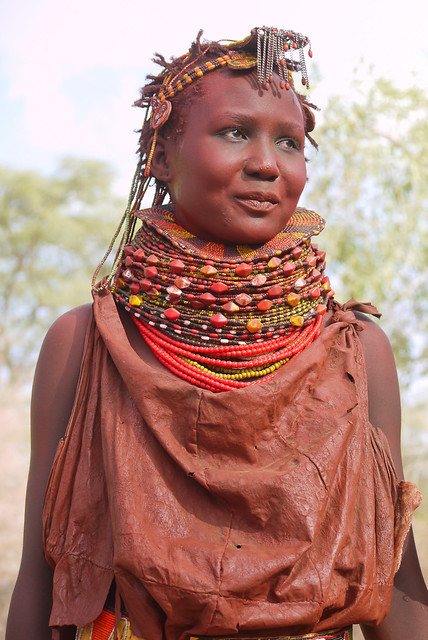
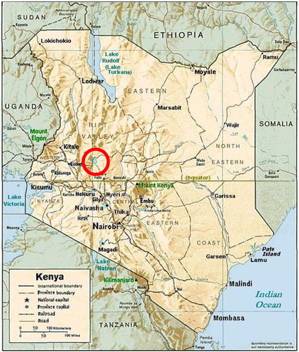
Over Easter long weekend, my friend Charlene and I took a grils' trip to Lake Turkana in Northern Kenya bordering Ethiopia and Uganda. It is the Northern-most lake in the Rift Valley, and was the set for the movie The Constant Gardener. Turkana is remote and almost completely undeveloped. Many Nairobians I know don't even consider it part of Kenya! This area is populated by the Turkana people, who are semi-nomadic pastoralists related to the Massais in the South.  

Getting to Turkana was quite the journey.  We took Fly 540 (a regional airline) to Lodwar via Kitale. It's a relatively short flight, each lag was about 1 hour.  However, when we landed in Kitale for the stopover, the plane's tire burst.  On one hand, I felt very fortunate that we landed safely since we're talking about an airstrip in the middle of nowhere.  On the other hand, we know what we'll have to deal with next.  As expected, there was no spare tire on the plane OR at the airport.  There was also not an engineer/mechanic on the ground, so even if we had a spare tire, nothing can be fixed.  So, they had to send a spare tire on the next flight from Nairobi to Kitale along with the engineer.  And since it will be dark by the time the spare tire arrives and we won't be able to take off to go to Lodwar, we all need to spend the night in Kitale.

The great thing about hick ups like this while traveling is that you become instant friends with other passenger over your shared misery.  We met a few others who incidentally was traveling to the same camp site in Turkana as we.  Knowing how absent minded people can be here, we created a buddy system with 2 American girls who were Peace Corp volunteers here, sure that this way, no one will be left behind the next morning when we need to rush out of Kitale en route to Lodwar.  Surely enough, the next morning when we got on the van to go back to the airport, the girls weren't there.  The van was running a couple shifts to take all the passenger, and we were pretty sure they weren't on the first shift.  So, being good "buddies", we held up the van and wanted to find the girls before we leave.

The way people problem solve in Africa is very fascinating to me.  Firstly, when a problem arise, even if it's a simple issue that one person can fix in 10 minutes, you will certainly find 3+ people attending to the issue.  The first person is the one who is facing/solving the problem, the second person is there to "consult", and the third person to observe/monitor.  So imagine 3 people trying to correct a simple mistake on a hotel bill...a simple algebraic problem with the help of a calculator surely can't be too difficult. However, because now 3 people are involved and they'll need to discuss and all, a normally 10 minute process can easily take half an hour or more.  The second interesting thing about African problem solving method is an extensive repetition of the problem as though if you repeatedly talk about the problem for enough times, the solution to the priblem will magically appear OR the problem will just go away.  So, going back to Kitale, as Charlene and I sat in the van, telling the driver that our friends are not here yet and they should call their hotel room #410 to make sure they come to the van, one of the Kenyan passenger asked, "your friend is not here"..."yes, that's what we said, they are not here, they are in room 410, someone is calling them".  Another Kenyan said "they didn't come?" ... "no, they have not come"..."which room are they?" ... "410"...A third person, "what room?"..."410"..."you have called them?"..."no, that's why we asked someone to call them"..."they haven't come?"..."no, they have not..."..."they didn't go with the first van?"..."no, they have not..."..."maybe they left already!"..."no, they were NOT on the first van"..."what room are they in?"..."410"..."I think they left already"..."No, we are sure they weren't on the first van"..."are you sure?"..."yes, we are sure"..."they are not in their room?"... well, this goes on, and you get the idea.  Finally, we found out that although the girls did not go with the first van, they did leave with someone else to the airport, so we went on our merry way to the Kitale airstrip right about the time the sun is rising, shining its gentle light on us.  Beautiful morning, with the added bonus of this hilarious problem-solving dialogue to set off a good day.


Thankfully, our plane was fixed overnight, and we were on our way to Lodwar.  We stayed at Eliye Springs Camp, and they sent someone to pick us.  The 1.5 hour journey from Lodwar to Eliye Springs Camp was surreal.  We drove through deserts, camels, giant termite hills with very very little amount of settlement.  Looking out of the car, the wilderness stretches as far as you can see, there was absolutely no development.  The area is completely off-grid, and getting food/water to the area is extremely difficult and expensive.  Once we arrived at the camp, we were greeted with icy cold towels and a refreshing herbal drink.  The landscape by the lake was not like anything I've seen before.  Lake Turkana is huge so it feels a bit like an ocean, the sand beach is lined with palm trees, and the climate was dry and hot.  It felt like a hybrid of sand dune and tropical beach with beautiful blue water and wildlife around.


One day we took a boat trip to Central Island National Park, which hosts a few crater lakes given the volcanoes around this area.  It was an easy hike, and the landscape was absolutely breathe-taking.  We were the only ones on the island, and it felt like we could be on the set of LOST.


The most memorable events during this trip was meeting some incredible individuals who have done incredibly adventurous and brave things in Kenya.  The Swiss owner Ralph, for example, was telling us about his challenge trying to develop tourism in Lake Turkana.  A biologist by training, Ralph first began organizing research safari in the 70's.  He eventually fell in love with Kenya and got into the safari business.  Then he got disenchanted with the safari industry as the tourists' focus of taking a safari gradually shift from the journey/adventure to the destination itself.  So he began building camp sites and got more into development work.  Up until this point, his story isn't all that uncommon; however, he began telling us the challenges he's had building/maintaining Eliye Spring Camp, and those stories sounded like they were from a Hollywood movie.

We discovered that Ralph has been frequently threatened by the community and his physical security is in serious jeopardy.  The population in Turkana is extremely poor.  The region is completely undeveloped, and being in the middle of a desert, there really is not a whole lot of resources or jobs.  Most people are unemployed and survive on hand outs from the government and the myriad of aid organizations.  The long period of dependency on aid created this weird mentality that any organization that's generating income should give the community money even if the organization is private and the community has done nothing to help advance its business.  Ralph's camp has been making losses for him, but he continued to hire local people so they have a source of income.  So far, he's hired half of the people from the village nearby, and has kept them despite of them stealing from his camp (not an uncommon problem elsewhere in Kenya).  Despite of this, there are a few youth group "leaders" who comes regularly and demand money for no good reason except the fact that they believe Ralph should contribute more to the community (a.k.a. their personal pocket).  If he does not agree to their demands, they threaten to burn his bomas or harm him physically.  In fact, the previous 2 owners of Eliye Spring Camp were both murdered by the locals.  There is no law reinforcement here, and the people are plagued by ignorance, desperation, resentment and greed.  Tribal differences can be easily used as a tool to usurp properties from one another.  People kill each other without blinking their eyes for reasons ranging from cattle raiding to pay for "bride price" all the way to killing someone to get money to pay school fees for their kids!  Normally if one wants justice, he would go to the village elders.  However, the elders in these villages are all drunkards and the communities are ruled by a handful of crooks.  The majority of the village people have no issue with Ralph, but they will not fight the crooks for Ralph since they don't know any better.  After having successfully done developments in other parts of Kenya, Ralph is convinced that Turkana is never going to be developed because in his words, these people are so ignorant and corrupt that they only see money and do not see how these work will benefit the community in the long run.  All their extortion and harassment makes investing in this region extremely unattractive and unproductive, no one in their right mind will stay here!  Ralph seem to be quite a kind person, so when he said "these people deserve to rot in hell", it really spoke volume and made me very sad that there's so little hope in a beautiful place like this that is the definition of paradise.

I couldn't help but wonder...are there people who are more deserving of aids than other?  Who has the right to judge which group is worthy of aid and which group isn't?  Can we really blame people for their ignorance and desperation?  People do desperate things in desperate situations.  I guess I haven't been in the development space for very long that I still have a lot of optimism in me.  So I believe that there's a time and a place for everything.  Maybe it's not Turkana's time yet...it may just be too much too soon right now.  Maybe the towns around it needs to be more developed first so that the Turkana people can be exposed to the impact of development little by little so that when development project do come, they can see their value and appreciate the positive impact they can bring to their community.  Give it a bit of time, maybe the impact of development will work its way to Turkana like the ripple when you drop a stone into a lake?

No matter what, it's undeniable there are A LOT that can be done here.  I asked Ralph, despite of all the hardships and challenges, why is he still in Kenya?  What keeps him inspired to stay here vs. moving back to Switzerland?  He said, "Switzerland is boring, everything is "done", here in Kenya, nothing is done, you can do so much and make an impact".  That really struck a chord with me.  For me, the "opportunities" of what more can be done in Africa (or developing countries in general) truly gets me out of bed every morning.  I don't feel like just another replaceable paper pusher in a giant money-making machine.  Even if I'm in the office, I'm actively doing something that I know will make a significant difference to the company that I'm working for, and to the community that I'm trying to impact.  I suppose the thrill of making one's mark in this world can be a bit addicting.

So what's next for Turkana?  Oil is recently discovered in Lake Turkana, apparently it's everywhere!  If one look at the history of what oil has done for African country, it hasn't exactly gotten a good track record, and has been more of a curse than a blessing.  If properly managed, this could be a significant opportunity for the region to get some revenue and build infrastructure (i.e. roads, schools, clinics) that could jumpstart the entire population into a better future.  However, with a government where politician do not think twice about selling out his country for personal financial gains and a country where illiteracy and lack of empowerment is so prevalent that the people do not DEMAND justice, I'm more apprehensive than happy about Turkana's future with this oil news.  The awe-inspiring, out of this world landscape and beautiful wildlife make Turkana the definition of paradise for me.  It would be so sad to see it turn into another Niger Delta with the big oil companies exploiting the poor and natural resources.  I pray that will never happen, and enough people in bilateral and civil organizations will garner enough voice to protect this paradise and make the best use of the resource it provides.  I sincerely hope that when I return to Turkana in 10 years, it can still remain the beautiful paradise that it is today.

Leaving Lodwar airstrip: this is the ticket counter, security screening, and baggage claim

Monday, April 2, 2012

Donation Update: Introducing...Kianda Vision Computer Center

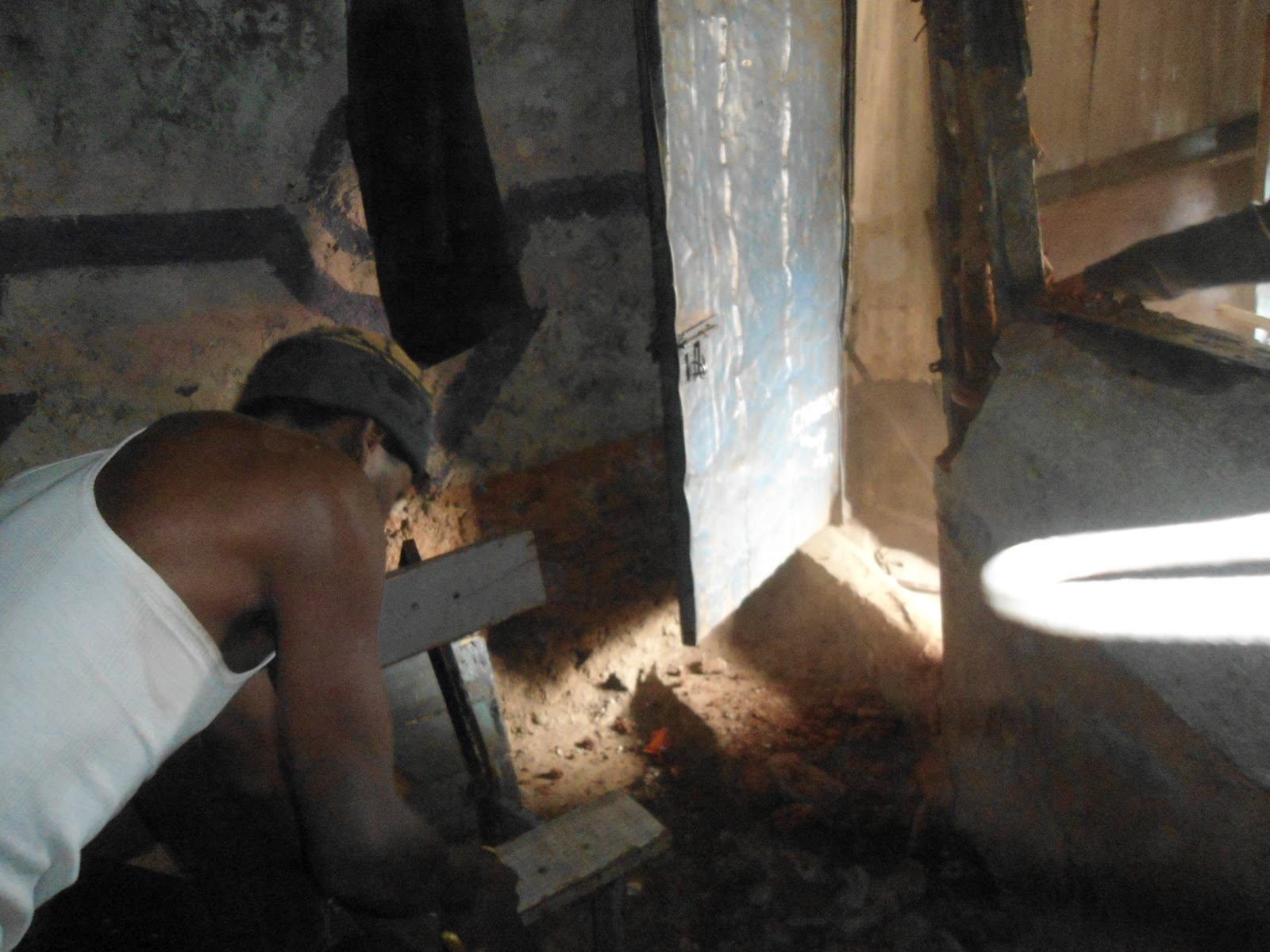
This is a much delayed update, but back in February, my friend Freddy and I have registered the computer center project under the name "Kianda Vision Computer Center".  Now we've purchased a 10 x 10 space in Kibera slum and am currently remodeling the place into a neighborhood computer center that will offer computer class to youths so they can gain the skills that will be helpful for them to get jobs.

I can't really take much credit for this project at all because with all my crazy travel, Freddy has been taking care of most of the logistics.  However, I'm excited to report that with the business model we've put together, this center likely can be self-sustaining with the donation everyone has made covering the upfront fixed cost.  We're still a bit short on a few things, so if anyone is interested in providing more assistance, please let me know!

Here are a list of things we need:

  • Old laptop, mouse, printers...etc. (I can collect these and bring back this summer)
  • Software: MS office, anti-virus...etc.
  • ...or you can click on the link to the right and donate some good old $$$, which can help contribute for our expansion and other necessary construction materials


Monday, March 19, 2012

Kenya Nzuri: Lake Baringo & Lake Bogoria


For my lovely friend, Charlene's birthday, a group of us took a trip to Lake Baringo and Lake Bogoria.

Lake Baringo has a surface area of about 130 square kilometres (50 sq mi) and an elevation of about 970 metres (3,180 ft). It is one of two freshwater lakes in the Rift Valley in Kenya (Lake Naivasha being the other one, also stunningly beautiful).  It is the home of over 470 species of birds and is a perfect place for bird lovers!

We stayed at a place called Robert's Camp.  It's basic, but charming.  I love the porch area, despite of the mosquitoes.  At night, hippos come to the camp site, and one of the night we were able to spot some of them grazing.  The climate was pretty hot and steamy when we were there, but we were able to just veg out and do absolutely nothing.  I think this is the first time I can understand what it is like to live in the South in the US when the temperature is high and air is humid!  


My favorite part of the weekend was all the birds and wildlife that just comes into our camp.  All sorts of colorful birds were around us, and we've successfully lure some to come near our porch with some delicious chevda.  It's quite interesting to witness the pecking orders of the various species of birds, some are timid, others are mean and ruthless.  I suppose, not that different from humans. :-) 


On the way back to Nairobi, we stopped by Lake Bogoria.  It is a saline, alkaline lake that lies in a volcanic region, and is home to one of the world's largest populations of lesser flamingoes. Lake Bogoria is also famous for geysers and hot springs,  It contains the highest concentration of geysers in Africa (at least 18 is known).  Despite of the extreme heat, the steam coming out of the hot spring by the bank of the lake was actually really refreshing, and there were a few local Kenyans sitting there enjoying their "sauna".  We cooked some eggs in the hot spring, which totally reminded me of my childhood in Taiwan where we would go to a local hot spring and do the same.


So another beautiful, fun weekend away from Nairobi has ended.  I feel extremely lucky to be able to make my tour around Kenya and explore its unspoiled beauty, this is something most Kenyan don't get to do, and hopefully through my posts the world can see how great Africa is and eliminate some of the negative, depressing images most Western media portray.

Monday, February 20, 2012

Kenya Nzuri: Mount Suswa

Completely off the beaten path and unimpressive from the outside, Mount Suswa is comprised of a massive double crater system and possibly one of the best hidden gems near Nairobi.  Suswa is the least known of the three famous Great Rift Valley volcanoes (the other 2 being the nearby Longonot and Menengai in Nakuru).  The summit is 2,356m (7,730ft) and affords a breath-taking view of pure beautiful nature.  
View from the turn off the tarmac towards Mt. Suswa, simply stunning!
Daniel, our Maasai guide...he gives guide to tourists, and even has his own blog

We spent a night camping at the rim of the outer crater.  The Maasai killed a goat and prepared some nyama choma (roasted meat) for us all from scratch...I never realize how much meat is on a tiny little goat until that night; it was a yummy, rustic feast!   

our little outdoor kitchen :)

our outdoor nyama choma...the meat glistened next to the fire, it's probably the most beautiful piece of meat I've ever eaten

The next morning we followed our guide, Daniel, up the mountain...The view from the hike was simply breath-taking, as far as being close to nature goes, this probably can't be beat!

beautiful view of the Great Rift Valley from the top


Sunday, February 12, 2012

Kenya Nzuri: Kakamega: the mystic forest

Kakamega forest is the only remnant in Kenya of the once great tropical rainforest that stretched across Central Africa, also known as the Guineo-Congolian forest. About 10,000 years ago when the climate became drier the area of the rainforest shrank to what it was about 250 years ago. With time, much of the indigenous forest has been cut down as people needed the land for farming and Kakamega forest has become an exotic isolated relic of this vast African equatorial jungle, making it a unique habitat in Kenya. To the local Luhya people, Kakamega forest has not only been a generous supplier of firewood and building materials for centuries, medicinal plants are being used to heal all kinds of illnesses. Due to commercial exploitation and increased population in the area the future of the forest was uncertain untill two nature reserves (Yala and Isecheno) in 1967 were being created and in 1985 two more reserves in the northern part of the forest (Buyangu and Kisere) were being created, somehow reducing the pressure on the forests natural resources. [excerpt on Kakamega from Africa-expert]

I've been wanting to visit Kakamega for a loong time, and finally, we made a trip there to visit the mystical forest.  Kakamega is famous for its biodiversity and butterflies.  We arrived during dry season, so there isn't much butterflies; however, there are still plenty of monkeys, birds, bats...etc.  


Great Turaco in Kakamega forest

We stayed at the beautiful and serene Rhondo Retreat...a bit of a splurge vs. my normal backpacking accommodation, but it's well worth the $50/night, which includes breakfast, afternoon tea, lunch, and dinner.  The place felt very colonial (like many other cottages in Kenya), but that didn't really bother me.  This may be a bit premature to think about considering I'm only in my 30's, but places like the Rhondo Retreat feels like the perfect retirement spot!  Labor is cheap (hence you can hire ppl to take care of the place), the weather is perfect, the food is fresh, air is crisp...imagine owning a place like this, rent it out to tourist to generate some income, and save a room or two for yourself.  There's nothing more serene and relaxing than waking up to the birds chirping, breathing in fresh air while listening to the sound of the wind blowing through the leaves, and occasionally spotting monkeys moving from tree to tree....Life can be nothing but beautiful in places like this :-)

chilling at the porch...spotting Columbus monkeys

Photos courtesy of Neeta Bhandari and Mark Rolland